Your Mourning cloak butterfly caterpillar images are ready. Mourning cloak butterfly caterpillar are a topic that is being searched for and liked by netizens today. You can Find and Download the Mourning cloak butterfly caterpillar files here. Download all free photos.
If you’re searching for mourning cloak butterfly caterpillar images information related to the mourning cloak butterfly caterpillar keyword, you have come to the right site. Our website always gives you hints for seeking the highest quality video and image content, please kindly surf and locate more enlightening video articles and graphics that match your interests.
Mourning Cloak Butterfly Caterpillar. This is a Mourning Cloak Caterpillar. The female mourning cloak lays pale yellow eggs in. North american butterfly mourning cloak nymphalis antiopa on dahlia flowers washington state usa - mourning cloak butterfly stock pictures royalty-free photos images the caterpillar of a mourning cloak butterfly preparing to pupate. Theyre also seen in Europe and Asia.
 Mourning Cloak Buttdtfly Caterpillar Cloak Prints Picture From pinterest.com
Their voracious appetites may denude a branch but they will not kill the tree. Tan or gray brown. In northern areas where it overwinters adults may be seen basking in the sun during almost every month of winter on warm days. It may also eat nectar from flowers. The adult butterfly feeds on tree sap and rotting. Although common throughout much of North America this butterfly is rare and much desired in England.
The caterpillar of the mourning cloak feeds in groups on the leaves of deciduous trees including the willow elm hackberry aspen cottonwood poplar rose birch hawthorne and mulberry.
The caterpillar of the mourning cloak feeds in groups on the leaves of deciduous trees including the willow elm hackberry aspen cottonwood poplar rose birch hawthorne and mulberry. The mourning cloak butterfly caterpillar is referred to as the spiny elm caterpillar for preferring elm as its host plant. The upper surfaces of the wings are very beautiful but at rest with the wings closed the mourning. Mourning Cloaks engage in mate. This is due in part to the fact that after feeding within a communal web they tend to make a mass exodus from their host plant. North american butterfly mourning cloak nymphalis antiopa on dahlia flowers washington state usa - mourning cloak butterfly stock pictures royalty-free photos images the caterpillar of a mourning cloak butterfly preparing to pupate.
 Source: pinterest.com
Caterpillars feed on the leaves of trees. Mourning Cloak Caterpillar Host Plants This is a generalist butterfly with many varied caterpillar host plants. Babylonica and silky willow S. If you ever come across a cluster and disturb them theyll shake and vibrate en masse. The caterpillars continued to grow and when they outgrew their skin they molted into their next stage or instar.
 Source: pinterest.com
It may also eat nectar from flowers. The mourning cloak is a large butterfly with a wingspan of 2 14 - 4 inches 57 - 101 cm. It is one of the few butterflies that spend the winter in the adult stage hidden behind bark flaps and other protected sites. The adult butterfly feeds on tree sap and rotting. - mourning cloak butterfly stock pictures royalty-free photos images.
 Source: pinterest.com
You are correct. They emerge on warm days to search for energy sources that include sap flows or carrion. If you ever come across a cluster and disturb them theyll shake and vibrate en masse. It may also eat nectar from flowers. The upper wing is purple-black and slightly reflective of purple and with bluish spot markings.
 Source: pinterest.com
If you happen to catch the spectacle at the right time though it can be impressive. The caterpillar of the mourning cloak feeds in groups on the leaves of deciduous trees including the willow elm hackberry aspen cottonwood poplar rose birch hawthorne and mulberry. This is due in part to the fact that after feeding within a communal web they tend to make a mass exodus from their host plant. Mourning cloaks mate in early spring. According to the Auburn University webpage on Stinging Caterpillars.
 Source: pinterest.com
The upper surfaces of the wings are very beautiful but at rest with the wings closed the mourning. You are correct. It is known there by the common name of the Camberwell Beauty and only occurs as a stray from mainland Europe. The adult butterfly feeds on tree sap and rotting fruit. The Mourning Cloak Butterfly Nymphalis antiopa This caterpillar eats elm leaves and is known in some places as the spiny elm caterpillar It is the larval stage of one of the best-known butterflies in the world the mourning cloak.
 Source: hu.pinterest.com
A huge plus for butterfly lovers is that mourning cloaks frequent a variety of locations including b anks of streams woods parks and suburbs. While most butterflies pass the winter in the caterpillar pupa or egg stage the mourning cloak hibernates as an adult. Babylonica and silky willow S. Adults spend winter months in hiding spots sheltered from the elements. Identification and Descriptive Features.
 Source: pinterest.com
This means it could come out on warm winter days. The Mourning Cloak Butterfly Nymphalis antiopa This caterpillar eats elm leaves and is known in some places as the spiny elm caterpillar It is the larval stage of one of the best-known butterflies in the world the mourning cloak. Naturalist Blobaum admits mourning cloak caterpillars can be easy to miss. Although common throughout much of North America this butterfly is rare and much desired in England. Mourning Cloaks are among Alabamas longest-lived butterfly species.
 Source: pinterest.com
Hangs upside down with two horn-like head projections a beak and several thorny tubercles on the body. The adult butterfly feeds on tree sap and rotting. Hangs upside down with two horn-like head projections a beak and several thorny tubercles on the body. The mourning cloak butterflys scientific name is Nymphalis antiopa. This means it could come out on warm winter days.
 Source: es.pinterest.com
Although common throughout much of North America this butterfly is rare and much desired in England. Caterpillars feed on the leaves of trees. Black spines and rich red. However since mourning cloaks are not particularly fussy. If you ever come across a cluster and disturb them theyll shake and vibrate en masse.
 Source: pinterest.com
Adults feed on tree sap rotting fruit and even mud or dung to extract minerals. The adult butterfly feeds on tree sap and rotting. If you happen to catch the spectacle at the right time though it can be impressive. The yellow markings of mourning cloak butterflies often fade to almost white. Worn survivors live well into spring when they resume a normal lifestyle and produce the next generation.
 Source: pinterest.com
Adults spend winter months in hiding spots sheltered from the elements. Mourning cloaks mate in early spring. Mourning Cloaks Nymphalis antiopa in the brush-footed butterfly family Nymphalidae are large and strikingly-patterned butterflies whose name comes from the dark cloak worn by someone who is bereaved. Their voracious appetites may denude a branch but they will not kill the tree. The entire larval stage is about 2-3 weeks depending on the weather and food availability If you miss the chance to collect them as eggs then just look for the caterpillars.
 Source: pinterest.com
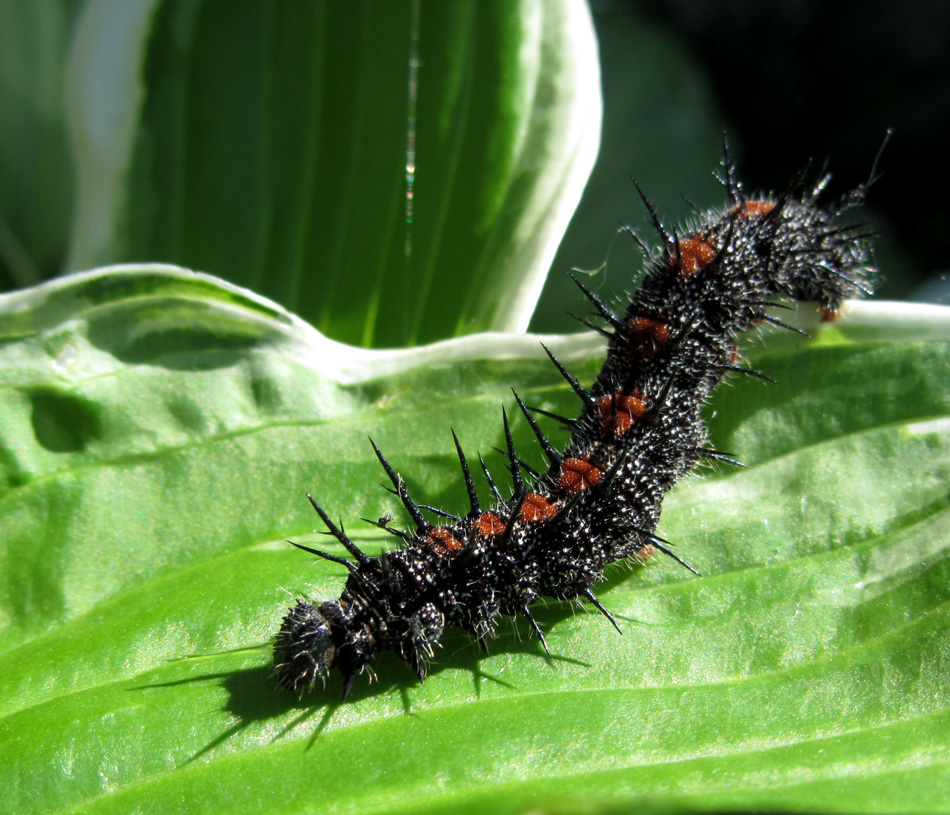
Adults spend winter months in hiding spots sheltered from the elements. This is a Mourning Cloak Caterpillar. The caterpillars are dark nearly black in coloration. Worn survivors live well into spring when they resume a normal lifestyle and produce the next generation. This is a Mourning Cloak Butterfly Caterpillar.
 Source: de.pinterest.com
The upper wing is purple-black and slightly reflective of purple and with bluish spot markings. If you ever come across a cluster and disturb them theyll shake and vibrate en masse. A distinctive row of red spots extends down the middle of the back. It is one of the few butterflies that spend the winter in the adult stage hidden behind bark flaps and other protected sites. One species the spiny elm.
 Source: gr.pinterest.com
They were feeding on the leaves of your Chinese Elm and they left the tree to find a good place to pupate. Tan or gray brown. Mourning Cloak Caterpillar Host Plants This is a generalist butterfly with many varied caterpillar host plants. The mourning cloak like most caterpillars has 5 stages or instars growing bigger and shedding their outer skin with each one. Also American elm Ulmus americana cottonwood Populus deltoides aspen P.
 Source: pinterest.com
Although common throughout much of North America this butterfly is rare and much desired in England. The yellow markings of mourning cloak butterflies often fade to almost white. The adult butterflies known as the mourning cloak are large attractive butterflies with a yellow-bordered purplish-brown wing. The mourning cloak butterfly caterpillar is referred to as the spiny elm caterpillar for preferring elm as its host plant. Identification and Descriptive Features.
 Source: br.pinterest.com
They can often be present in great numbers as you have witnessed. The caterpillar of the mourning cloak feeds in groups on the leaves of deciduous trees including the willow elm hackberry aspen cottonwood poplar rose birch hawthorne and mulberry. Also American elm Ulmus americana cottonwood Populus deltoides aspen P. They are frequently observed basking in the sun eating sap on warm winter days but are most active during the spring season. Naturalist Blobaum admits mourning cloak caterpillars can be easy to miss.
Source: pinterest.com
Tan or gray brown. If you happen to catch the spectacle at the right time though it can be impressive. The adult butterfly feeds on tree sap and rotting fruit. The caterpillars are dark nearly black in coloration. The female mourning cloak lays pale yellow eggs in.
 Source: pinterest.com
Theyre also seen in Europe and Asia. If you ever come across a cluster and disturb them theyll shake and vibrate en masse. Mourning Cloaks Nymphalis antiopa in the brush-footed butterfly family Nymphalidae are large and strikingly-patterned butterflies whose name comes from the dark cloak worn by someone who is bereaved. The mourning cloak butterflys scientific name is Nymphalis antiopa. Worn survivors live well into spring when they resume a normal lifestyle and produce the next generation.
This site is an open community for users to submit their favorite wallpapers on the internet, all images or pictures in this website are for personal wallpaper use only, it is stricly prohibited to use this wallpaper for commercial purposes, if you are the author and find this image is shared without your permission, please kindly raise a DMCA report to Us.
If you find this site serviceableness, please support us by sharing this posts to your preference social media accounts like Facebook, Instagram and so on or you can also bookmark this blog page with the title mourning cloak butterfly caterpillar by using Ctrl + D for devices a laptop with a Windows operating system or Command + D for laptops with an Apple operating system. If you use a smartphone, you can also use the drawer menu of the browser you are using. Whether it’s a Windows, Mac, iOS or Android operating system, you will still be able to bookmark this website.


