Your Mourning cloak butterfly eggs images are ready. Mourning cloak butterfly eggs are a topic that is being searched for and liked by netizens today. You can Get the Mourning cloak butterfly eggs files here. Download all free images.
If you’re searching for mourning cloak butterfly eggs pictures information connected with to the mourning cloak butterfly eggs keyword, you have pay a visit to the right site. Our website frequently gives you hints for seeing the maximum quality video and picture content, please kindly search and locate more informative video content and graphics that fit your interests.
Mourning Cloak Butterfly Eggs. Besides being conspicuous in their adult stage Mourning Cloaks are also known for their gregarious social behaviors as caterpillars. But now for the most steampunk behavior of all. Although common throughout much of North America this butterfly is rare and much desired in England. Below this species is brown with a white border very well camouflaged among leaves and on tree trunks.
 Mourning Cloak Nymphalis Antiopa My Little Friend Beautiful Butterflies Beautiful Bugs Colorful Moths From pinterest.com
They emerge on warm days to search for energy sources that include sap flows or carrion. This means it could come out on warm winter days. Besides being conspicuous in their adult stage Mourning Cloaks are also known for their gregarious social behaviors as caterpillars. L5 Pupa Adult. Although common throughout much of North America this butterfly is rare and much desired in England. It hibernates as an adult.
Like other butterflies Mourning Cloaks go through a complete metamorphosis from egg to caterpillar to chrysalis to adult.
Its size is typically in the 30 -. A few days later the eggs begin to darken. Unlike most other species the mature caterpillars are roamers and hence can be located even on trees and plants that are not their hosts. Mourning Cloaks become active when temperatures reach about 60 degrees and thus are often the first butterflies seen in spring. Nymphalis antiopa female laying eggs on Salix sp. They can fly when temperatures outside.
 Source: de.pinterest.com
Some live as long as 10 months overwintering in protected areas of bark logs or crevices in buildings. Mourning Cloaks are among Alabamas longest-lived butterfly species. This butterfly is not only gorgeous but also amazing. The common name of this species has been spelled in a variety of ways– Morning Cloak Mourning Cloak and Morningcloak. The mature larvae wander before pupating and emerge from the chrysalis in about 11 days usually in early July.
 Source: es.pinterest.com
Summer is butterfly season so here we will look at the biggest and most obvious of K-Countrys Lepidoptera the Mourning Cloak Nymphalis antiopa. Nymphalis antiopa female laying eggs on Salix sp. Females then lay eggs in circular patterned clusters along host tree twig branches. Mourning Cloaks emerge from hibernation in April and mate through May. The mourning cloak Nymphalis antiopa Linnaeus is a large distinctive butterfly and is one of our most widely distributed butterfly species.
 Source: pinterest.com
Hofmann Flickr Caterpillar Cloaks. Before the leaves bud-out Mourning cloaks are known to lay their eggs as ring clusters around the terminal twigs on host plants. Hofmann Flickr Caterpillar Cloaks. L5 Pupa Adult. Woodlands woodland edges parks and rarely despite the photos in open fields taking nectar.
 Source: pinterest.com
Most overwinter as an egg or pupa such as the Swallowtails or. Egg Larva L1. Mourning Cloak First Butterfly of the Season. This morning I saw my first butterfly of the season floating above my garden. A full-grown caterpillar will be two inches in length.
 Source: pinterest.com
Woodlands woodland edges parks and rarely despite the photos in open fields taking nectar. It was a Mourning Cloak Nymphalis antiopa a stunningly beautiful butterfly. Mourning Cloak First Butterfly of the Season. The larvae live by forming groups in their host plants until they shed their skin. It is clear that they support the There is Safety in Numbers philosophy.
 Source: pinterest.com
Some live as long as 10 months overwintering in protected areas of bark logs or crevices in buildings. Mourning Cloaks become active when temperatures reach about 60 degrees and thus are often the first butterflies seen in spring. Woodlands woodland edges parks and rarely despite the photos in open fields taking nectar. The mourning cloaks place these eggs in single-layer ring clusters around the terminal twigs on host plants adjoined in a tapestry of stars. The first brood in late spring will actually hibernate throughout the summer called aestivation.
 Source: pinterest.com
Eggs hatch in 10 to 12 days and the young larvae are gregarious and feed in a communal web. Unlike most other species the mature caterpillars are roamers and hence can be located even on trees and plants that are not their hosts. Like all other Lepidoptera species the mourning cloak butterfly life cycle also includes four stages of metamorphosis. Nymphalis has one of the longest lifespans of all butterflies as it estivates a period of dormancy during the summer and also hibernates all winter in the adult phase. They are eggs larvae pupae and adults.
 Source: pinterest.com
While most female butterflies will lay a single egg the mourning cloak lays hers in groupings of up to several hundred. Its not surprising that this species was the first of the season as one of its other common names is Harbinger of Spring. After the future of the species has been. In the Sacramento Valley there appears to be only one brood in spring. This morning I saw my first butterfly of the season floating above my garden.
 Source: pinterest.com
But now for the most steampunk behavior of all. The first brood in late spring will actually hibernate throughout the summer called aestivation. This is uncommon for butterflies. In the Sacramento Valley there appears to be only one brood in spring. Mourning Cloak eggs are white becoming tan when they are about to hatch.
 Source: pinterest.com
The mourning cloaks place these eggs in single-layer ring clusters around the terminal twigs on host plants adjoined in a tapestry of stars. K-Country is home to almost 20 species of butterflies. They are eggs larvae pupae and adults. Above this butterfly is a brownishred color with a wide yellow margin and a row of blue submarginal spots. Mourning Cloaks engage in mate.
 Source: tr.pinterest.com
Eggs hatch in 10 to 12 days and the young larvae are gregarious and feed in a communal web. The host plant selection is vital because it provides the food source for the young caterpillars. The Mourning Cloak is usually one of the first butterflies to fly in colder months. In the springtime male mourning cloaks take advantage of conspicuous sunny perches as they wait for receptive females for mating. Hofmann Flickr Caterpillar Cloaks.
 Source: pinterest.com
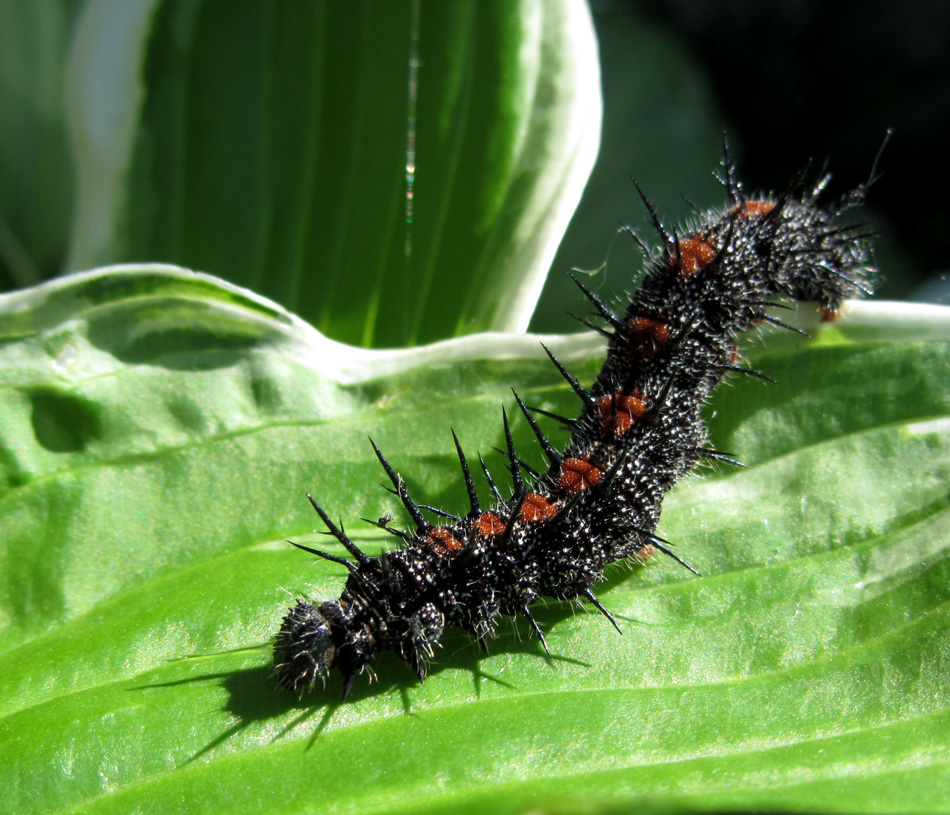
It was a Mourning Cloak Nymphalis antiopa a stunningly beautiful butterfly. The Mourning Cloak is usually one of the first butterflies to fly in colder months. The caterpillars are black and bristly with white speckles and orange prolegs. A huge plus for butterfly lovers is that mourning cloaks frequent a variety of locations including banks of streams woods parks and suburbs. The mourning cloak Nymphalis antiopaLinnaeus is a large distinctive butterfly and is one of our most widely distributed butterfly species.
 Source: ar.pinterest.com
Mating takes place between early spring and June. Before the leaves bud-out Mourning cloaks are known to lay their eggs as ring clusters around the terminal twigs on host plants. Summer is butterfly season so here we will look at the biggest and most obvious of K-Countrys Lepidoptera the Mourning Cloak Nymphalis antiopa. This is uncommon for butterflies. This morning I saw my first butterfly of the season floating above my garden.
 Source: pinterest.com
The day before they hatch the eggs turn to black primarily due to the little black heads showing through. Mourning Cloaks become active when temperatures reach about 60 degrees and thus are often the first butterflies seen in spring. In northern areas where it overwinters adults may be seen basking in the sun during almost eve. Worn survivors live well into spring when they resume a normal lifestyle and produce the next generation. The large shed their skin four times in their developmental process.
 Source: pinterest.com
Mating takes place between early spring and June. This butterfly is very wide ranging and can be found across North America and Eurasia into northern South America and even Japan. Mourning Cloaks are among Alabamas longest-lived butterfly species. In northern areas where it overwinters adults may be seen basking in the sun during almost eve. It is known there by the common name of the Camberwell Beauty and only occurs as a stray from mainland Europe.
 Source: pinterest.com
A few days later the eggs begin to darken. This butterfly is very wide ranging and can be found across North America and Eurasia into northern South America and even Japan. The day before they hatch the eggs turn to black primarily due to the little black heads showing through. Egg Larva L1. Worn survivors live well into spring when they resume a normal lifestyle and produce the next generation.
Source: pinterest.com
They emerge on warm days to search for energy sources that include sap flows or carrion. Its size is typically in the 30 -. Like other butterflies Mourning Cloaks go through a complete metamorphosis from egg to caterpillar to chrysalis to adult. Eggs hatch in 10 to 12 days and the young larvae are gregarious and feed in a communal web. The Mourning Cloak is usually one of the first butterflies to fly in colder months.
 Source: pinterest.com
A full-grown caterpillar will be two inches in length. This is uncommon for butterflies. The day before they hatch the eggs turn to black primarily due to the little black heads showing through. A full-grown caterpillar will be two inches in length. Some live as long as 10 months overwintering in protected areas of bark logs or crevices in buildings.
This site is an open community for users to submit their favorite wallpapers on the internet, all images or pictures in this website are for personal wallpaper use only, it is stricly prohibited to use this wallpaper for commercial purposes, if you are the author and find this image is shared without your permission, please kindly raise a DMCA report to Us.
If you find this site serviceableness, please support us by sharing this posts to your own social media accounts like Facebook, Instagram and so on or you can also save this blog page with the title mourning cloak butterfly eggs by using Ctrl + D for devices a laptop with a Windows operating system or Command + D for laptops with an Apple operating system. If you use a smartphone, you can also use the drawer menu of the browser you are using. Whether it’s a Windows, Mac, iOS or Android operating system, you will still be able to bookmark this website.


